
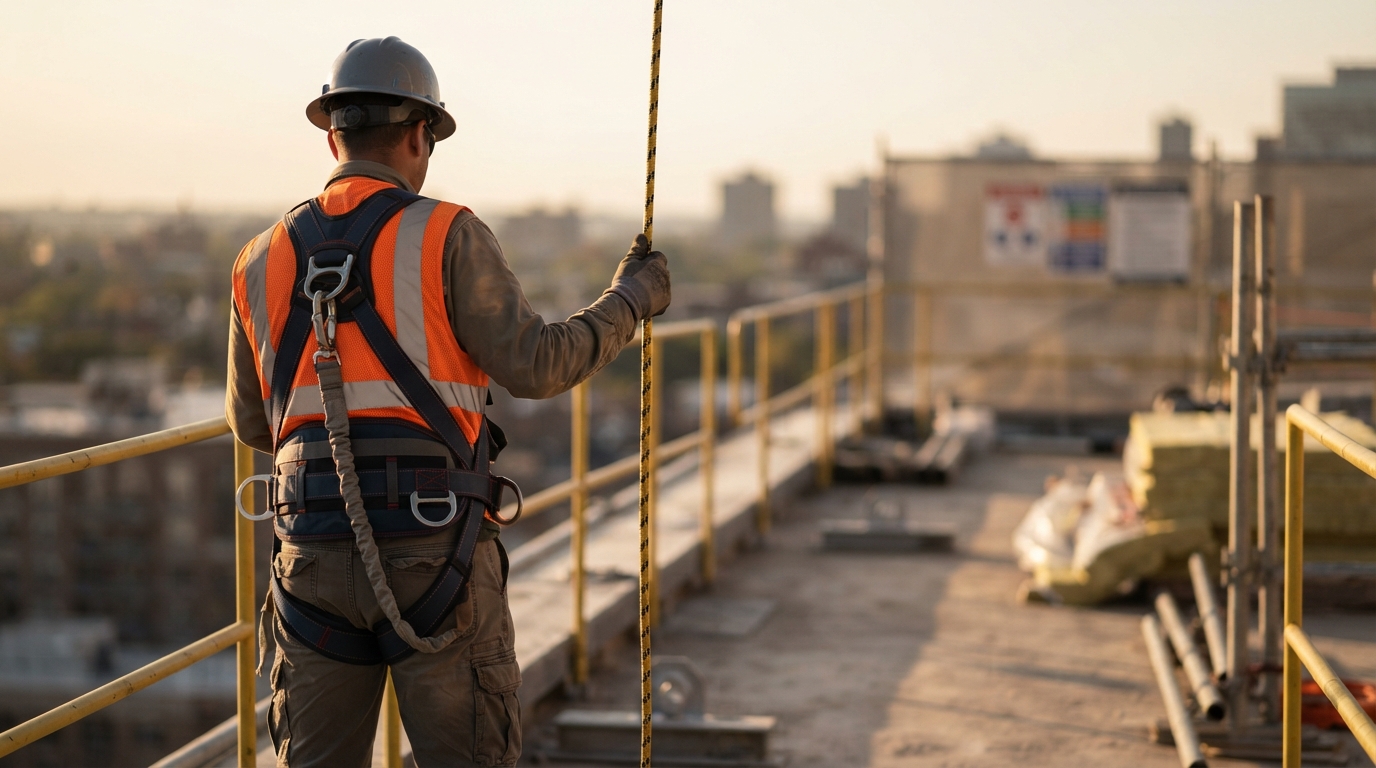
Recap:
-
Fall protection training teaches workers to recognize fall hazards, select the right equipment, and respond to emergencies at height.
-
OSHA requires fall protection at specific trigger heights depending on industry, with construction set at 6 feet.
-
Courses typically combine hazard recognition, equipment use, and rescue basics to meet workplace compliance needs.
Workers who complete fall protection training learn to identify fall hazards, correctly use harnesses and anchorage systems, and execute basic rescue procedures before an emergency occurs. These three skill areas form the backbone of most OSHA-aligned courses and directly reduce the risk of injury on elevated worksites.
Falls remain one of the most common causes of serious workplace injury, which is why Fall Protection Training is required for employees who work at height in construction, roofing, manufacturing, and general industry settings. Courses built around the OSHA Competent Person framework typically walk through hazard identification, equipment selection, and emergency response in a structured sequence rather than as isolated topics.
Hazard Recognition and Risk Assessment
The first skill employees build is the ability to spot fall hazards before they become incidents. This includes recognizing unprotected edges, skylights, floor holes, and unstable walking surfaces.
Under federal regulation, fall protection has been cited as OSHA’s most common violation for over a decade, and the agency requires protection at specific height thresholds depending on the work setting. According to the OSHA fall protection standard 1926.501, employers must provide fall protection systems and confirm that walking and working surfaces have the structural integrity to support employees safely.
Training typically covers:
-
Identifying trigger heights for different industries (construction, general industry, shipyards)
-
Spotting hazards that require protection regardless of height, such as holes or exposure to dangerous equipment
-
Assessing walking and working surfaces before work begins
-
Recognizing when existing protective systems are inadequate or improperly installed
This foundation helps employees make faster, more accurate judgment calls on the job rather than relying solely on supervisor direction.
Equipment Use and Fall Prevention Systems
Once hazards are identified, employees need hands-on familiarity with the equipment designed to stop a fall or prevent one from happening. A course description from HAZWOPER Center notes that gaining hands-on knowledge of the latest fall protection equipment, including harnesses, lifelines, and anchors, helps ensure safety on the job.
Skills in this category generally include:
-
Proper harness fitting and inspection before use
-
Correct anchorage point selection and connection
-
Understanding the difference between guardrail systems, safety net systems, and personal fall arrest systems
-
Recognizing damaged or unsuitable equipment that should be removed from service
Program material from the same provider describes course content that provides in-depth education on harnesses, guardrails, anchorage systems, and best practices to reduce the risk of falls from heights. These skills apply across industries including transportation, industrial, and manufacturing settings where elevated work is routine.
Emergency Response and Rescue Basics
Equipment alone does not prevent injury if a fall does occur. Employees also need to know how to respond quickly when a coworker is suspended in a harness or has fallen.
Training in this area typically covers critical rescue techniques to respond quickly after a fall event, since prolonged suspension can create additional medical risk. Supervisors and competent persons are often trained to a higher standard so they can direct a response, which supports the broader point that trained supervisors can respond promptly and appropriately, potentially saving lives and minimizing injuries during a fall incident.
Comparing Core Skill Areas
|
Skill Area |
What Employees Learn |
Why It Matters |
|
Hazard Recognition |
Identifying unprotected edges, holes, unstable surfaces |
Prevents exposure before work begins |
|
Equipment Use |
Harness fitting, anchorage selection, system types |
Reduces injury if a fall occurs |
|
Rescue Response |
Suspension trauma awareness, rescue sequencing |
Minimizes harm after an incident |
|
Compliance Knowledge |
OSHA trigger heights, documentation |
Reduces regulatory and legal risk |
Frequently Asked Questions
Who is required to complete fall protection training? Employees who work at or above the height thresholds set by OSHA for their industry, including construction workers, roofers, and industrial personnel, generally need this training before performing elevated work.
How long does a typical course take? Course length varies by provider and depth of content, with some competent-person courses structured as a single extended session covering multiple instructional units.
Does fall protection training cover rescue procedures? Yes. Most structured courses include a rescue component alongside hazard recognition and equipment training, since recognizing a hazard and knowing how to respond to an actual fall are treated as separate skill sets.
Is this training available online? Many providers, including HAZWOPER Center, offer self-paced online formats so employees can complete coursework without disrupting work schedules.
Employees who build these skills are better equipped to work safely at height and to meet the documentation expectations employers face during inspections. For organizations evaluating training options, reviewing how a provider structures hazard recognition, equipment instruction, and rescue content can help determine whether the course matches the actual risks present on a given worksite. More detail on available online formats is available through Hazwoper Center, which lists its fall protection coursework alongside related safety training offerings.