
Short answer:
-
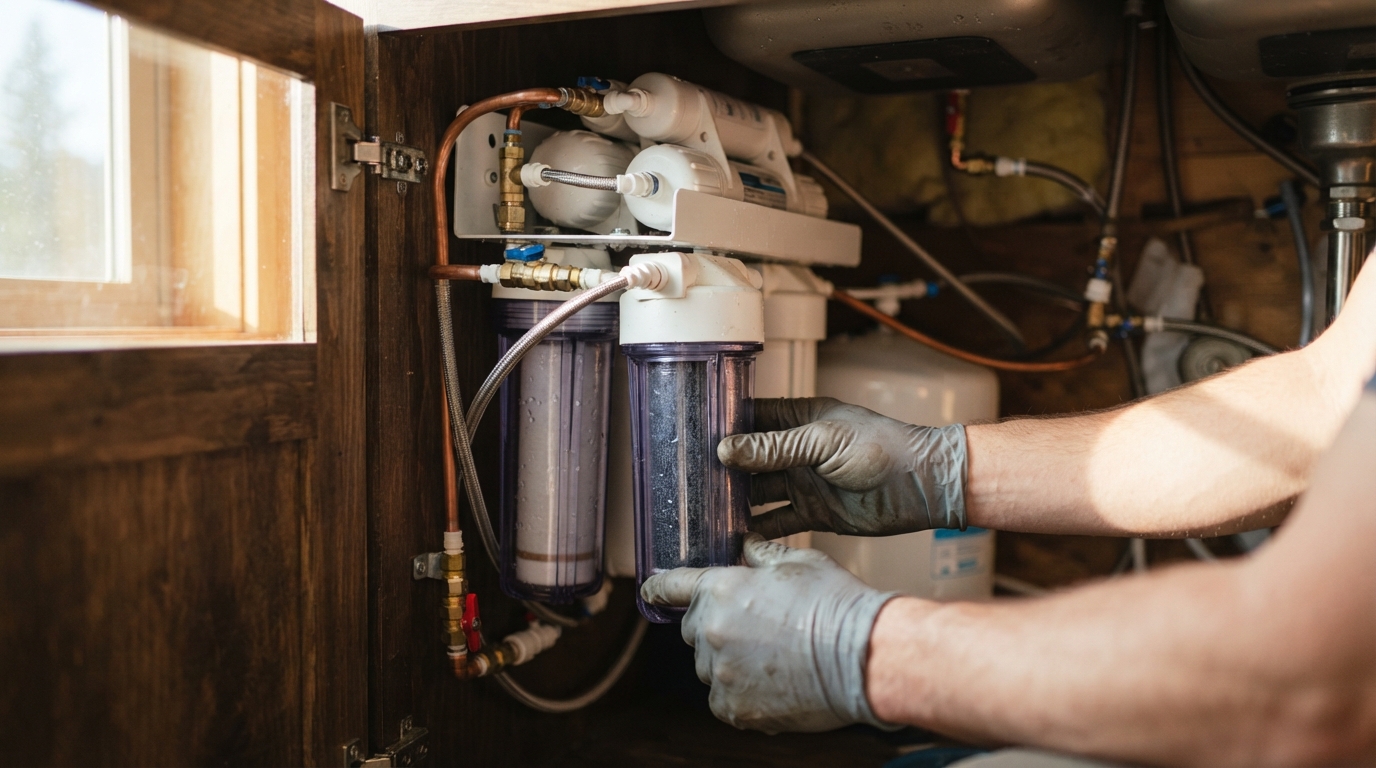
Reverse osmosis systems need periodic filter swaps, membrane checks, and sanitizing to keep producing clean, great-tasting water.
-
Montana’s well and municipal water often carries hardness minerals, iron, and sediment that can shorten membrane life without routine maintenance.
-
Scheduling professional inspections once a year, alongside home filter changes, keeps systems running efficiently and protects water quality.
Homeowners across Montana rely on reverse osmosis to turn hard, mineral-heavy well water or municipal supplies into cleaner water at the tap. But an RO unit is only as good as its upkeep. Skipped filter changes, clogged membranes, and ignored pressure tanks are the most common reasons these systems stop performing the way they did on day one.
Montana’s geology means many households pull water from private wells affected by iron, sulfur, sediment, and mineral buildup, conditions that place extra demand on an RO membrane. Reverse Osmosis in Montana setups are frequently paired with pre-filtration or softening to handle these regional water challenges before water ever reaches the membrane stage. Understanding how these systems age and what maintenance they require helps property owners avoid costly breakdowns and protect their investment.
How Reverse Osmosis Systems Work and Why Maintenance Matters
An RO system forces water through a semipermeable membrane under pressure, separating dissolved solids and contaminants from the water that passes through. A reverse osmosis system incorporates a water treatment process that removes undesirable materials from water by using pressure to force water molecules through a semipermeable membrane. Over time, the membrane can accumulate trapped particles, scale, and biological buildup if feed water is not properly managed.
-
Sediment and iron particles can clog pre-filters within weeks in some Montana well systems.
-
Mineral buildup narrows membrane pores, reducing flow and raising rejection costs.
-
Neglected systems can waste water: these systems also can generate a significant amount of water waste during operation, with a typical point-of-use RO system sending five gallons of water or more down the drain for every gallon of treated water it produces, a ratio that worsens when membranes are fouled.
Routine care keeps these failure points in check and preserves the water-quality benefits the system was installed to deliver.
Common Maintenance Tasks for RO Systems
Most reverse osmosis maintenance follows a predictable cycle tied to usage and local water chemistry.
-
Pre-filter replacement – Sediment and carbon pre-filters typically need changing every six to twelve months, more often with high sediment or iron content common in Montana wells.
-
Membrane inspection – The RO membrane should be checked annually for reduced flow, elevated total dissolved solids (TDS) readings, or signs of scaling.
-
Storage tank and faucet sanitizing – Periodic sanitizing prevents bacterial growth in the holding tank and dispensing line.
-
Pressure and flow testing – Confirming the system holds appropriate pressure ensures the membrane operates within its designed range.
According to EPA guidance on small drinking water systems, point-of-use devices such as reverse-osmosis filters are usually installed under a kitchen sink and can comply with drinking water standards for contaminants such as arsenic, lead, and radium, but that compliance depends on components being maintained as designed.
Signs Your System Needs Service
|
Symptom |
Likely Cause |
Typical Fix |
|
Slow water flow at the faucet |
Clogged pre-filter or fouled membrane |
Filter replacement or membrane cleaning |
|
Odd taste or odor |
Depleted carbon filter or tank buildup |
Filter change and tank sanitizing |
|
Water pools around the unit |
Loose fitting or cracked tubing |
Inspection and component repair |
|
Rising TDS readings |
Membrane nearing end of life |
Membrane replacement |
Catching these signs early prevents a small maintenance item from becoming a full system replacement.
Choosing Professional Support for Upkeep
Montana’s mix of well and municipal water sources means pre-treatment needs vary significantly by property. A provider familiar with regional water conditions can test incoming water, diagnose which components are under the most stress, and set a realistic maintenance schedule rather than a generic one. Local specialists offer services ranging from water softeners and filtration systems to reverse osmosis drinking water purification and treatment options for common Montana water contaminants, which matters because pre-treatment choices directly affect how long an RO membrane lasts.
180 Water, a Helena-based provider, offers reverse osmosis filtration along with water softening, whole-home filtration, and UV disinfection services for residential and commercial properties. For homeowners weighing a maintenance plan or a first-time installation, working with 180 Water for testing and diagnosis can help match the right combination of pre-treatment and RO equipment to the property’s specific water profile.
Frequently Asked Questions
How often should RO filters be replaced? Most pre-filters need replacement every six to twelve months, though homes with heavy sediment or iron in their water supply may need more frequent changes.
How long does an RO membrane typically last? Membrane lifespan varies with water quality and usage, but annual inspection helps determine whether a membrane is still performing efficiently or needs replacement.
Can hard water damage a reverse osmosis system? Yes. Hardness minerals can scale the membrane over time, which is why many Montana installations pair RO with a water softener as pre-treatment.
Is professional maintenance necessary, or can homeowners do it themselves? Basic filter changes are often manageable at home, but membrane testing, pressure diagnostics, and sanitizing are typically more reliable when handled by a trained water treatment technician.
Reliable drinking water in Montana depends less on the equipment itself and more on how consistently it is maintained. A well-kept reverse osmosis system continues delivering clean, great-tasting water for years, while a neglected one can fail well before its expected lifespan. Scheduling regular filter changes, annual membrane checks, and prompt repairs keeps households protected from the sediment, hardness, and contaminant challenges common throughout the state’s water supplies.