
• Flat feet, ingrown toenails, and sports-related heel pain (Sever’s disease) rank among the most frequent reasons parents in Cypress, TX seek a pediatric foot specialist.
• Many mild conditions resolve with supportive shoes or orthotics, but persistent pain, limping, or swelling warrants a professional evaluation.
• A child foot doctor Cypress TX can distinguish between normal growth patterns and conditions that need active treatment.
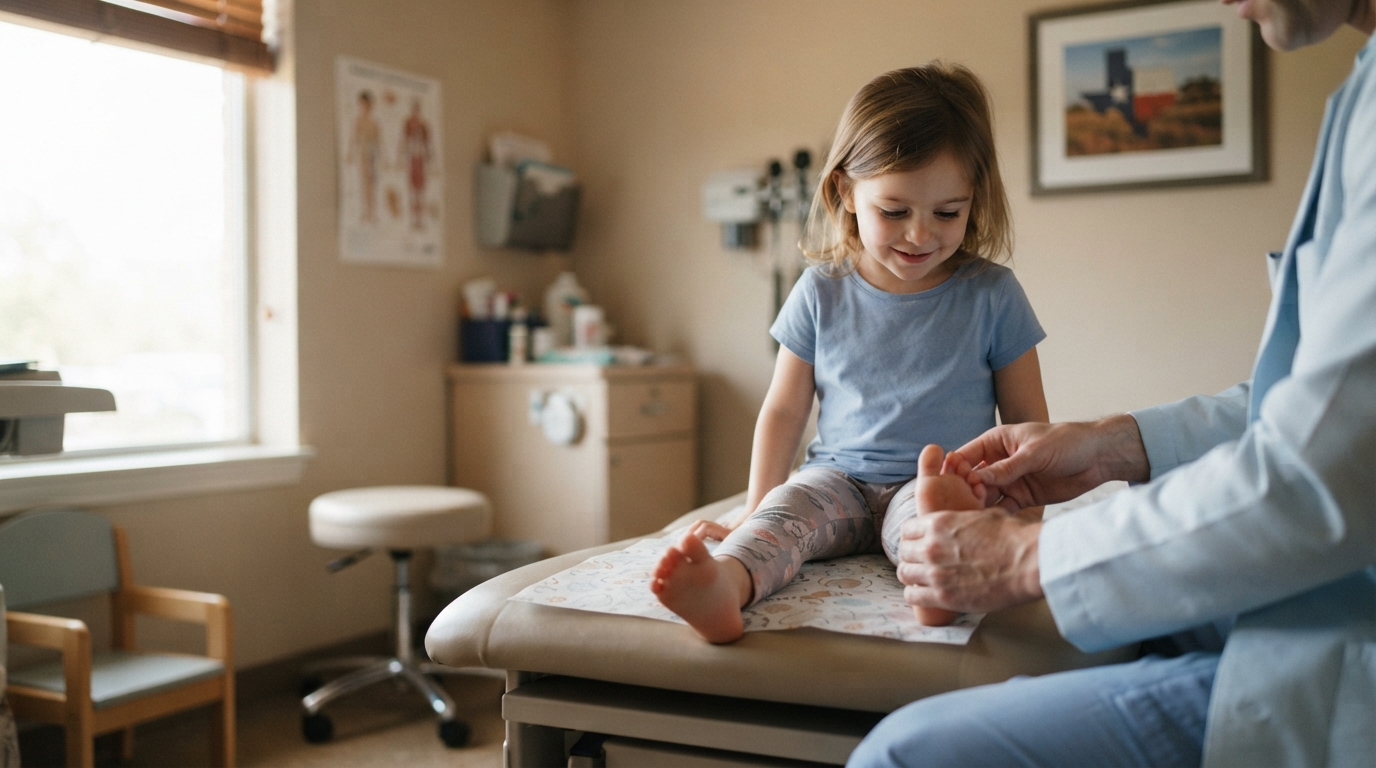
Parents often notice their child limping, complaining of foot pain, or avoiding sports before they realize a podiatric issue is at play. The most reliable way to find out what is going on is to consult a Child Foot Doctor Cypress TX who can examine gait, arch development, and toenail health in one visit.
Cypress Foot & Ankle Center is one of several local practices offering pediatric foot care alongside services for bunions, diabetic foot concerns, and sports injuries. Understanding which conditions are common in growing feet helps parents know when a visit is warranted rather than waiting out a problem that may not resolve on its own.
Flat Feet and Arch Development Concerns
Flat feet are among the most frequently discussed pediatric foot issues, and for good reason. Research summarized in a review of pediatric podiatry notes that the normal findings of flat foot versus children’s age estimate 45% of pre-school children, and 15% of older children have flat feet. Most cases are flexible and painless, but clinical guidance emphasizes that only painful flat feet should be diagnosed and treated.
Key signs parents should watch for include:
• Complaints of cramping in the feet or legs after walking or standing
• Avoidance of running, jumping, or sports activities
• Visible flattening of the arch when standing that disappears while sitting
When treatment is needed, management is directed according to pain, age, and flexibility, and when foot orthoses are indicated, inexpensive generic appliances will usually suffice. This means most children do not require invasive intervention, only monitoring and supportive footwear.
Ingrown Toenails in Active Kids
Ingrown toenails are another leading complaint among school-age children and teenagers. According to a clinical overview of the condition, tight-fitting shoes, cutting nails too short or rounding the edges, toe injuries like stubbing, and genetics can all contribute to the problem. It is described as one of the most common reasons kids and teens see a pediatric podiatrist.
Symptoms typically include:
1. Redness and swelling around the nail border
2. Tenderness when the toe is touched or squeezed inside shoes
3. Signs of infection, such as warmth or drainage, in more advanced cases
Treatment is usually straightforward. Documented aftercare for pediatric ingrown toenail procedures notes that aftercare typically involves a Band-Aid and iodine gel for about five days, with a return to regular activities right away. For recurring cases, a case report on conservative management found that conservative treatment methods using orthonyxia are highly effective, allowing quick help for pediatric patients with a low risk of complications, according to research published via the National Institutes of Health.
Sports-Related Heel Pain and Overuse Injuries
Active children, especially those between ages 8 and 14, are prone to heel pain linked to growth plate stress. One podiatry source explains that this condition, calcaneal apophysitis or Sever’s disease, causes inflammation and pain in the heel and is common in active children from 8 to 14 years of age because the growth plate doesn’t fully develop until at least age 14.
Other overuse-related concerns seen in young athletes include:
|
Condition |
Typical Age Range |
Common Cause |
|
Sever’s disease |
8-14 years |
Repetitive heel stress from sports |
|
Flexible flat feet |
Under 5 years (often resolves) |
Ligament laxity, developing arch |
|
Ingrown toenails |
School-age to teens |
Tight shoes, improper nail trimming |
|
Plantar warts |
School-age children |
Viral exposure in locker rooms/pools |
A broader clinical summary lists additional issues seen in pediatric practices, noting that common concerns include flat feet, toe walking, in-toeing, out-toeing, plantar warts, ingrown toenails, and developmental conditions like Sever’s disease and clubfoot. Left unaddressed, some of these conditions can affect posture and mobility later, since untreated foot and ankle issues during childhood can lead to long-term complications, affecting mobility, posture, and quality of life.
When to Schedule a Pediatric Foot Evaluation
Not every foot complaint requires an office visit, but certain signs should prompt parents to act sooner rather than later.
• Persistent limping or a noticeable change in walking pattern
• Pain that interrupts sleep or daily activities
• Swelling, redness, or warmth around a toe or joint
• A child who withdraws from sports or play due to discomfort
Cypress Foot & Ankle Center provides evaluations for these types of concerns for young patients in the Cypress area. A timely visit helps confirm whether a condition is a normal part of growth or one that benefits from orthotics, footwear changes, or further treatment.
Frequently Asked Questions
At what age should flat feet be evaluated by a doctor? Flat feet are common in early childhood and often resolve naturally. A doctor visit is warranted when a child reports pain, avoids physical activity, or shows an asymmetric or worsening arch pattern as they get older.
Can ingrown toenails in children be treated without surgery? Many mild to moderate cases respond to conservative care such as soaking, proper trimming, and topical care. More severe or recurring cases may require a minor in-office procedure.
Is heel pain in young athletes always a sign of injury? Not necessarily. Growth-related heel pain from repetitive stress is common in active children and often improves with rest, supportive shoes, and activity modification, though a professional evaluation rules out other causes.
Do children outgrow most foot problems? Many conditions like flexible flat feet improve with growth, but symptomatic or worsening issues should be assessed rather than assumed to resolve on their own.
Foot problems in children are rarely emergencies, but they are also not something to guess about at home. A brief evaluation can confirm whether a condition needs active treatment or simply time, giving parents a clear path forward and giving kids the comfort to keep moving, playing, and growing without unnecessary pain.